
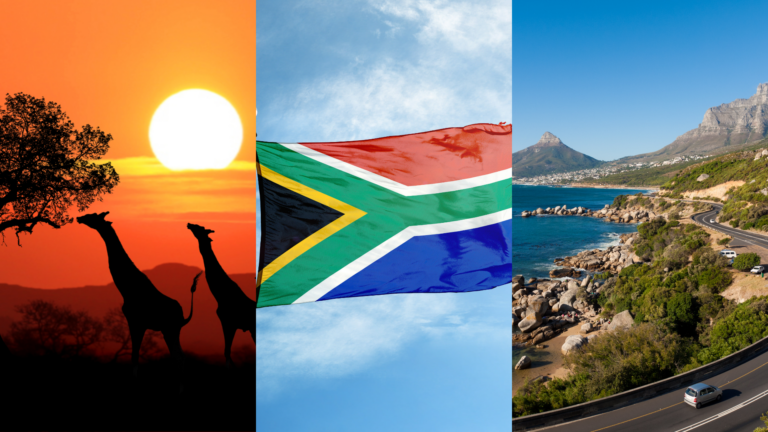
The South Africa economy 2026 is defined by a paradox: on one hand, the country secured its first sovereign credit rating upgrade in nearly two decades, was removed from the FATF grey list, and attracted a record $54 billion in investment pledges at the 6th South Africa Investment Conference; on the other, GDP growth has been revised down to 1.0%–1.4% — the lowest projection among emerging markets — as global headwinds from the Middle East conflict and US tariffs weigh on the outlook.
For any international company evaluating Africa market entry, the South Africa economy 2026 remains the continent’s most sophisticated starting point — with Africa’s only truly modern stock exchange, the most developed financial and legal infrastructure on the continent, and a clear reform trajectory under Operation Vulindlela. The question is not whether to engage, but where to enter, which sector to prioritise, and how to structure for the structural constraints that remain.


South Africa Economy 2026: GDP Growth and Economic Outlook
Foreign direct investment momentum has reached a historic high, with the 6th South Africa Investment Conference (SAIC) in March 2026 securing R415 billion ($54 billion) in pledges from 81 companies across 22 source markets. President Cyril Ramaphosa subsequently raised the five-year investment target to R3 trillion ($180 billion). However, GDP growth remains under pressure: the International Monetary Fund’s April 2026 World Economic Outlook revised the South Africa economy 2026 growth forecast down to 1.0%, citing the impact of the Middle East conflict on oil prices. The National Treasury’s own budget forecast projects a recovery toward 1.8% average annual growth from 2026 to 2028, contingent on continued structural reform delivery.
South Africa’s structural strengths are underpinned by Africa’s most developed institutional infrastructure. The Johannesburg Stock Exchange (JSE) is the continent’s only truly modern capital market. The country is the world’s leading producer of platinum-group metals (PGMs), a major gold producer, and holds significant reserves of manganese, chromium, and vanadium — critical minerals increasingly in demand for the global clean energy transition. The country’s geographic and economic role as Africa’s gateway is reinforced by its G20 membership, AfCFTA participation, and the bilateral relationships deepened during South Africa’s G20 Presidency in 2025.
The reform trajectory under Operation Vulindlela — a joint initiative of the Presidency and National Treasury — is tangible and measurable. The government has unlocked private grid access for the first time, streamlined water licensing, opened freight logistics to private participation, and reformed visa policy to attract skills and boost tourism. The South Africa economy 2026 is on track for a third consecutive primary budget surplus — a credibility signal that contributed directly to the sovereign credit rating upgrade from S&P Global, the first in nearly two decades.
Key risks remain structural and real. Unemployment at 31.9% is among the highest in the world, with youth unemployment exceeding 60%. Load shedding, while significantly reduced since March 2024, has not been permanently resolved. Logistics bottlenecks — particularly for mining exports through Transnet — continue to constrain productivity. And the 1.0%–1.4% growth trajectory is the lowest among emerging markets, meaning the reform implementation window must be used decisively.
“South Africa is open for business, and the time for investment is now. We have recorded four consecutive quarters of growth, inflation is converging toward our 3% target, our sovereign rating has been upgraded, and we have been removed from the FATF grey list.”
— President Cyril Ramaphosa · 6th South Africa Investment Conference · 31 March 2026
Sectors with the Greatest Growth Potential

Critical Minerals

Green Hydrogen

Digital Services

Manufacturing
Mining and Critical Minerals
Mining accounts for approximately 8% of South Africa’s GDP and a major share of exports, generating $151 billion in 2024. The country leads globally in platinum-group metals (PGMs), manganese, and chromium, with strong positions in gold and iron ore. New opportunities are emerging in critical minerals for electric vehicles and batteries — vanadium, nickel, and lithium — as the government reopens exploration licences and encourages local beneficiation and processing. For international companies, the opportunity lies in mining technology, ESG-compliant green mining infrastructure, and value-added downstream processing incentivised through the Mining Charter.
Renewable Energy and Green Hydrogen
South Africa offers an investment opportunity worth approximately R161.2 billion ($8.7 billion) in renewable energy capacity through 2030 — covering 12.9 GW of utility-scale and behind-the-meter projects. The establishment of the National Transmission Company of South Africa (NTCSA) as an independent entity in early 2026 opened a competitive electricity market for the first time. Private investment in renewable energy now exceeds $20 billion across 112 projects, with Scatec ASA, Mainstream Renewable Power, and Red Rocket among active developers. Solar and wind projects offer 20-year power purchase agreements, creating predictable long-term returns.
Fintech and Digital Services
South Africa is one of Africa’s four major fintech hubs alongside Nigeria, Kenya, and Egypt, and captures a significant share of the continent’s startup funding. Fintech revenues across Africa are projected to grow 13-fold by 2030, with South Africa positioned as the regulatory and infrastructure anchor for cross-border digital financial services. Regulatory sandbox frameworks managed by the South African Reserve Bank (SARB) and the Financial Sector Conduct Authority (FSCA) provide structured pathways for international companies to pilot and scale innovative financial products.
Automotive and Advanced Manufacturing
South Africa’s automotive sector is the continent’s most developed, producing approximately 600,000 vehicles annually and contributing around 6.8% of GDP through direct and indirect activity. The industry is anchored by BMW, Toyota, Volkswagen, Mercedes-Benz, Ford, and Nissan — all of whom maintain assembly operations in the country. The transition to electric vehicle production is accelerating, with the government’s EV Roadmap laying out a pathway for local EV assembly by 2035.
Trends Redefining the South Africa Economy 2026
The forces reshaping the South Africa economy 2026 are not cyclical. They are structural, externally anchored, and moving on a timeline set by the reform agenda rather than by domestic political sentiment.
FATF Exit and Sovereign Upgrade: The Cost of Capital Is Falling
South Africa’s removal from the FATF grey list in late 2025 and its first sovereign credit rating upgrade in nearly two decades (S&P Global: BB, Positive outlook) have tangible commercial consequences: reduced risk premiums on sovereign and corporate borrowing, lower cost of capital for local project financing, and improved access to international institutional investor pools. The South African Reserve Bank (SARB) has begun a measured easing cycle, with the repo rate declining from its 2024 peak as CPI inflation converged toward the 3% midpoint target (3.1% in April 2026).
AfCFTA: South Africa as the Gateway to Africa
The African Continental Free Trade Area (AfCFTA) — which covers 54 countries and a combined market of approximately 1.4 billion people — positions South Africa as the most credible continental entry point for international companies. South Africa’s financial infrastructure, legal system, and logistics network, including the Port of Durban as the largest container port in sub-Saharan Africa, are unmatched on the continent. The African Development Bank has committed R20.5 billion for South Africa’s 2026/27 financial year to support infrastructure and energy transition projects.
The Second Investment Drive: R3 Trillion Target
The 2026 SAIC formally launched South Africa’s Second Investment Drive, with President Ramaphosa setting a new goal of R3 trillion ($180 billion) over five years. The Development Bank of Southern Africa, the African Development Bank, and the New Development Bank together have signalled capacity to mobilise between R393 billion and R786 billion in additional financing at standard leverage ratios.
Opportunities for International Companies
The most concentrated entry opportunities in the South Africa economy 2026 are in Gauteng (Johannesburg and Pretoria) for financial services, technology, and mining headquarters; the Western Cape (Cape Town) for fintech, tourism, and agritech; KwaZulu-Natal (Durban) for logistics, automotive, and port-adjacent manufacturing; and the Northern Cape for mining and renewable energy. Special Economic Zones — including the Dube TradePort SEZ and the Coega IDZ — offer preferential corporate tax rates (15% versus the standard 27%), customs duty rebates, and streamlined permitting for qualifying foreign investments.
Entry mechanisms include establishing a private company (Pty Ltd) or entering through a joint venture with a B-BBEE compliant local partner. The Invest SA One Stop Shop, operated by the Department of Trade, Industry and Competition (dtic), provides expedited company registration, visa processing, and incentive access for qualifying foreign investors entering the South Africa economy 2026.
Barriers to consider: B-BBEE compliance requirements affect ownership structure, procurement access, and sector licensing — and must be planned from day one, not retrofitted. Load shedding, while significantly reduced since March 2024, remains an operational risk. Transnet’s rail and port logistics bottlenecks continue to extend lead times for mining and manufacturing exports. ZAR volatility creates foreign exchange exposure for companies whose revenues are denominated in USD or EUR, requiring an active hedging strategy from market entry.
South Africa Economy 2026: Macroeconomic Outlook for Investors
The South African Reserve Bank (SARB) has entered a measured easing cycle, with the repo rate declining from its 2024 peak as inflation converged toward the 3% target midpoint (CPI at 3.1% in April 2026). The primary budget surplus — achieved for the third consecutive year in 2025/26 — signals genuine fiscal consolidation. The government’s medium-term growth forecast of 1.8% average annual growth from 2026 to 2028 is contingent on continued energy reform delivery and logistics sector private participation.
South Africa’s capital markets remain the most developed in Africa. The JSE lists over 350 companies and is the continent’s dominant exchange by a significant margin. Project finance for renewable energy, infrastructure, and mining is increasingly accessible through the Development Bank of Southern Africa (DBSA), the Industrial Development Corporation (IDC), and the African Development Bank’s R20.5 billion commitment for 2026/27.
Conclusions
The South Africa economy 2026 offers one of the most structurally interesting entry propositions in Africa: the continent’s most sophisticated institutional infrastructure, a reform government with a measurable delivery track record under Operation Vulindlela, world-leading positions in critical minerals, and a renewable energy market generating R161.2 billion in investable opportunities through 2030. The sovereign upgrade and FATF exit remove two longstanding barriers to institutional capital — and the $54 billion in investment pledges confirm that international confidence is returning in earnest.
The strategic question for companies evaluating the South Africa economy 2026 is not whether the country will continue attracting investment — the evidence confirms it will. The right question is more granular: which sector, which region, and which entry structure aligns with your risk tolerance and five-year horizon? Companies that arrive with a B-BBEE strategy, an energy self-sufficiency plan, and a local partnership model will find South Africa not just viable, but genuinely competitive as an African base for regional expansion across 54 AfCFTA markets.
Thinking about entering the South African market?
Gedeth Network helps international companies analyse, plan and execute their expansion into South Africa — from market entry strategy to subsidiary set-up.
Talk to our team