
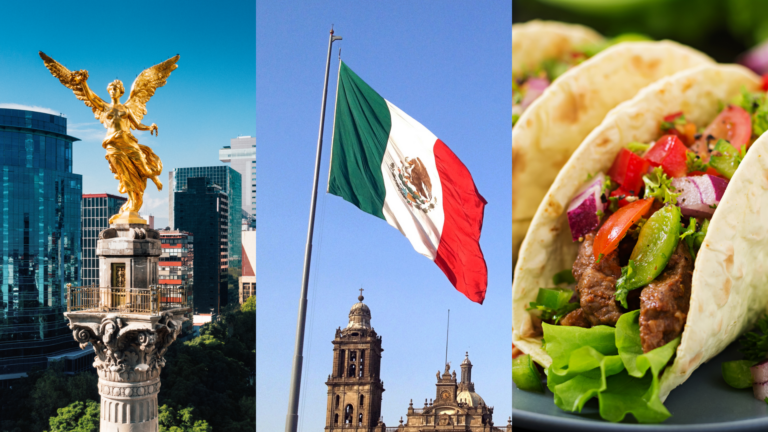
The Mexico economy 2026 outlook is shaped by a paradox: on one hand, Mexico is posting record-high foreign direct investment figures and consolidating its position as one of the big winners of the global supply chain reconfiguration; on the other, its economic growth remains modest and faces a decisive turning point with the USMCA review, scheduled for July 2026.
For any company evaluating nearshoring as a strategy, Mexico combines structural advantages that are hard to match — geographic proximity, productive integration with the United States and competitive costs — with challenges that are best understood before, not after, investing.


Mexico Economy 2026: Economic Outlook
Foreign direct investment reached a historic high in the first quarter of 2026, totaling $23.6 billion — a 10.4% increase year-on-year and the third consecutive year of growth. The United States remains the leading source of these flows, growing 23.6% year-on-year. However, GDP growth remains modest: according to the International Monetary Fund, the latest projections place Mexico’s 2026 expansion between 1.3% and 1.5%, a gradual recovery after the 2025 slowdown.
Mexico’s structural strengths are well known but still underexploited: it is part of a North American market that represents close to 30% of global GDP, has a mature industrial base — particularly in the automotive and electronics sectors — and benefits from preferential tariff treatment under the USMCA. Geographic proximity to the United States reduces logistics times and costs compared with Asia, an advantage that has become critical in an environment of shorter, more diversified supply chains.
But the nearshoring opportunity does not automatically translate into growth. At least four structural constraints remain: insufficient electricity capacity — states such as Nuevo León, Chihuahua, Baja California and the Bajío region already face restrictions connecting new large-scale industrial loads — lagging logistics and transport infrastructure, legal uncertainty for investors, and the USMCA review itself, in which the United States has openly raised the possibility of not renewing the agreement. On top of this, vehicles manufactured in Mexico currently face an average tariff of 18.75% to enter the US market, higher than that applied to several Asian countries.
Sectors with the Greatest Growth Potential


Automotive Manufacturing and Electric Mobility
The automotive industry accounts for 4.5% of Mexico’s GDP and 31% of manufacturing exports, making it the most reliable thermometer of the country’s industrial health. Despite tariff pressure, European manufacturers — particularly German automakers — are expanding their presence in Mexico with dedicated electric vehicle production lines, betting that the country will consolidate as an export platform for electric mobility into North America. For suppliers of components, batteries, automotive software and engineering services, this represents a multi-year window to integrate into supply chains that are being reconfigured in real time. The condition: keep a close eye on how the USMCA review unfolds, as it will define rules of origin and applicable tariffs for the sector.
Data Centers and Digital Infrastructure
Mexico has become one of the preferred destinations for cloud and AI infrastructure expansion in North America. Amazon Web Services announced an investment of more than $5 billion in cloud infrastructure, Google Cloud opened a technology region in Querétaro, and CloudHQ will allocate $4.8 billion to six data centers in the same region. Current data center demand — 305 megawatts — is projected to grow nearly fivefold over five years, to around 1,500 megawatts. This expansion creates opportunities for specialized construction firms, cooling systems, cybersecurity, fiber connectivity and, above all, dedicated power generation, which will be the enabling condition for these projects to materialize.
Renewable Energy and the Energy Transition
The energy transition has stopped being an environmental topic and become an industrial competitiveness requirement. Energy-intensive sectors — data centers, mining, automotive manufacturing — increasingly depend on the availability of solar, wind and green hydrogen to sustain their growth. Mexico has privileged natural conditions for solar and wind generation, and international companies developing, financing and operating renewable energy projects find a market here with demand guaranteed by industrial growth itself — though conditioned on the pace of the government’s new electricity tenders.
High-Value Agribusiness
Global demand for healthy, organic and traceable food is transforming Mexico’s agribusiness sector. Investment is concentrated in precision agriculture, value-added processing and the export of superfoods to the United States and Europe. For international companies in agtech, packaging, cold-chain logistics and quality certification, Mexico combines favorable agro-climatic conditions with preferential access to the world’s highest-purchasing-power markets through the USMCA.
Trends Redefining the Market
The nearshoring concept is evolving toward what some analysts call “nearshoring 2.0”: it is no longer just about relocating assembly lines, but about attracting investment in higher value-added sectors — semiconductors, advanced electronics, digital infrastructure — that require specialized human capital and reliable energy. Digital transformation of industrial processes, automation and AI applied to manufacturing are advancing in parallel, while the energy transition becomes the variable that will determine which regions of the country capture this wave of investment and which fall behind.
Opportunities for International Companies
The real opportunities are concentrated in the industrial corridors of the north and the Bajío region, where productive integration with the United States already exists, but also in central and southeastern regions seeking to attract investment through tax incentives and available labor. Companies most likely to succeed are those that bring technology, training or solutions to the country’s structural bottlenecks — energy, logistics, technical talent — rather than those simply seeking low-cost labor.
Barriers to consider: regulatory and tariff uncertainty stemming from the USMCA review, limited energy availability in saturated industrial zones, and permitting and processing times that remain longer than in competing markets. A well-planned market entry — with prior analysis of energy availability and local legal advice — significantly reduces these risks.
Mexico Economy 2026: Macroeconomic Outlook for Investors
Beyond sector-specific opportunities, the broader macroeconomic environment of the Mexico economy 2026 remains a key factor for investment timing. Banco de México has maintained a gradual easing cycle, bringing its benchmark rate down from recent highs while keeping inflation within its target range — a combination that has supported domestic credit growth and helped keep the peso relatively stable against the dollar despite ongoing trade-policy noise from north of the border.
Mexico’s capital markets, while smaller than those of the United States, offer growing access to project financing, infrastructure bonds and private equity vehicles focused on nearshoring-related real estate and logistics. For international companies, this combination of moderate inflation, a competitively valued currency and improving access to local financing makes Mexico an increasingly viable base not only for manufacturing, but also for regional treasury and financing operations serving the broader Latin American market.
Conclusions
The Mexico economy 2026 offers one of the strongest value propositions in North America for companies looking to optimize their supply chains: proximity, competitive costs and guaranteed access to an export market. But the entry decision cannot rest solely on that structural promise. The right strategic question is not whether Mexico will keep attracting investment — the FDI data confirms it will — but whether the specific region where a company plans to operate has the energy, infrastructure and legal certainty needed to sustain that investment over five years. And, inevitably, how exposed the sector of interest is to the outcome of the USMCA review.
Thinking about nearshoring to Mexico?
Gedeth Network helps international companies analyze, plan and execute their expansion into Mexico — from market entry strategy to subsidiary set-up.
Talk to our team