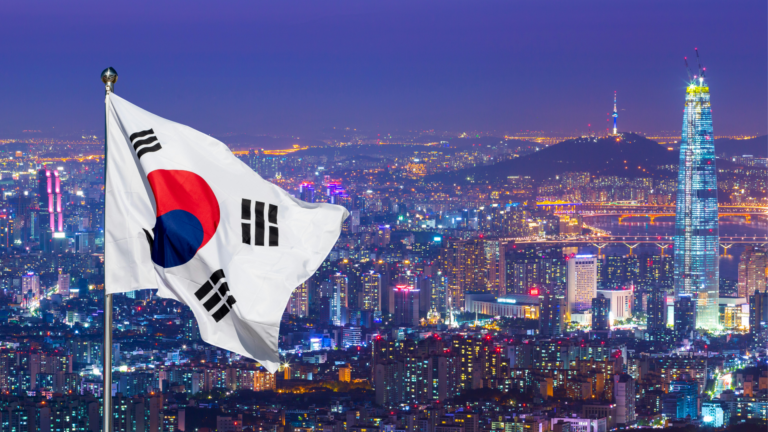
South Korea is one of Asia’s most dynamic and technologically advanced economies, a country that in just a few decades has transformed itself from a largely agricultural society into a global hub for manufacturing, innovation and design. Today its products — from smartphones and cars to batteries and cultural content — are part of daily life around the world, and its companies sit at the centre of some of the most strategically important supply chains on the planet. For international businesses looking to expand into Asia, this makes South Korea far more than another market on the map: understanding its main industries is the clearest way to see exactly where the strongest opportunities to invest, partner and grow can be found, and how a foreign company can position itself within an economy that consistently rewards quality, speed and technological ambition.
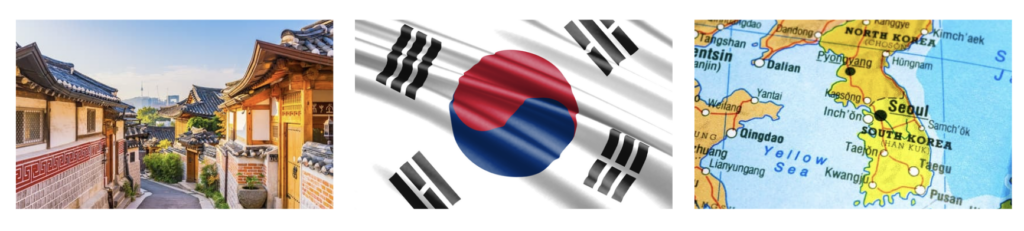
South Korea’s economy at a glance
South Korea is one of the world’s largest economies, and its success rests on a combination that few countries can match: a powerful export base, world-class advanced manufacturing and an exceptionally strong culture of research and development that feeds a constant stream of new products and processes. The country pairs a highly educated, highly skilled workforce with modern infrastructure and one of the highest rates of digital adoption anywhere, which means new technologies move from concept to mass market unusually fast. Just as importantly for foreign companies, South Korea is deeply connected to the global economy through an extensive network of trade agreements — including the Korea-EU Free Trade Agreement and the Korea-US Free Trade Agreement — that lower tariffs and reduce friction at the border. Together, these factors make South Korea not only a substantial market in its own right but also a credible base from which to serve the wider Asia-Pacific region and beyond.
Semiconductors and electronics
Semiconductors are the heart of the South Korean economy and the single clearest reason the country matters so much to global industry. South Korea is a world leader in memory chips and home to some of the largest semiconductor manufacturers anywhere, and that dominance gives it real weight in the technologies — artificial intelligence, data centres, advanced computing — that depend on a steady supply of high-performance chips. Its strength does not stop at semiconductors: the country has a deep electronics heritage that extends across displays, smartphones and a wide range of consumer devices, all supported by a dense and sophisticated network of component and materials suppliers. For international companies, this concentration of capability is an opportunity in itself, because firms that offer specialised equipment, advanced materials, design services or niche components can find a ready and demanding customer base, while the sheer scale of the sector makes being close to the supply chain a genuine competitive advantage.
Automotive and electric vehicles
South Korea is a major automotive producer and, in recent years, has moved aggressively and successfully into electric vehicles, to the point where its carmakers are now significant players in the global EV market rather than regional specialists. This shift matters because the transition from combustion engines to electric mobility is rewriting the entire automotive value chain, and South Korea is positioned at the centre of that change. The result is a broad spread of opportunities: not only in vehicle assembly, but in the components, power electronics, software and connectivity that modern vehicles depend on, as well as in charging infrastructure and the new mobility services growing up around electric cars. For suppliers and technology partners able to keep pace with fast product cycles and high quality expectations, the Korean automotive sector offers a long runway of demand.
Batteries and energy storage
Closely tied to its automotive ambitions, South Korea has become one of the world’s true powerhouses in EV batteries and energy storage. Korean battery manufacturers are among the global leaders in the field, supplying carmakers across Europe, North America and Asia, and the country has built deep expertise spanning cell chemistry, manufacturing and large-scale production. As demand for electric vehicles and grid storage continues to climb, this creates a substantial and durable opportunity for companies that supply battery materials, specialised manufacturing equipment, testing and engineering services, or related technology. Because batteries sit at the intersection of the automotive, energy and electronics industries, a foothold in this sector can also open doors across several of the other industries described here.
Shipbuilding and heavy industry
South Korea is also one of the leading shipbuilding nations in the world, with particular strength in complex, high-value vessels such as LNG carriers, where engineering capability and quality matter far more than low cost. This expertise reflects a broader industrial base: heavy industry, steel and machinery remain important pillars of the Korean economy and continue to support a wide network of suppliers, subcontractors and engineering partners. While these sectors are more traditional than semiconductors or batteries, they are far from static, as shipbuilders and heavy-industry firms invest in cleaner fuels, automation and digital design, creating openings for companies that can bring specialised technology, components or services. For international businesses with relevant expertise, heavy industry remains a meaningful and often underestimated point of entry into the Korean market.
Green energy and hydrogen
South Korea has set ambitious decarbonisation goals, and the drive to meet them is turning energy into one of the most dynamic parts of the economy. The country is investing in hydrogen, offshore wind and a range of clean technologies, and it is doing so with the same industrial seriousness it has applied to semiconductors and batteries. For foreign companies, this is one of the most promising and fast-developing areas to watch, because those with clean-energy expertise, engineering capability, project experience or innovative solutions will find both public commitment and private investment standing behind the transition. And because the energy shift touches manufacturing, transport and heavy industry alike, opportunities in this sector tend to connect naturally to the rest of the Korean economy.
The digital and creative economy
Few countries have turned culture into a global industry as effectively as South Korea. Its cultural exports — music, film, television and gaming — have become a worldwide phenomenon, and the broader digital and creative economy is now among the fastest-growing parts of the country. This success is not only a cultural story but a commercial one, built on sophisticated production, strong intellectual property and a domestic consumer market that is among the most connected and digitally engaged in the world. For international companies, that combination opens opportunities in content and entertainment, gaming, e-commerce, digital platforms and the many services that support them. It also means South Korea is an unusually good place to test digital products and business models, because Korean consumers adopt and judge new offerings quickly.
Biotechnology and healthcare
Biotechnology, pharmaceuticals and contract manufacturing have become a clear national priority as South Korea looks for the next engine of long-term growth beyond its established industrial strengths. The country has built significant capacity in biologics and in contract development and manufacturing, and it is backing healthcare with the kind of sustained investment and policy support that has driven its success in other sectors. For partners, investors and specialised suppliers, this creates a growing field of opportunity that ranges from manufacturing and equipment to research collaboration and services. As an ageing population increases domestic demand for advanced healthcare at the same time, the sector combines a strong export logic with a solid and expanding home market.
Opportunities for foreign companies
Taken together, these industries describe a sophisticated, fast-moving market that consistently rewards innovation, quality and speed. The clearest opportunities for international companies lie in semiconductors and their supply chain, in batteries and electric vehicles, in clean energy and hydrogen, and in biotechnology and the digital economy — sectors where South Korea has both scale and ambition. As in any advanced market, however, capability alone is not enough: success depends on choosing the right entry strategy, understanding how Korean business operates and building genuine, lasting local partnerships. Companies that take the time to do this well find a market that can reward them not only with sales, but with a position inside some of the most important supply chains in the world.
Enter the South Korean market with Gedeth
South Korea combines scale, technology and ambition in a way that few markets can match, but it is also fast-paced, demanding and highly competitive, which makes careful preparation essential. Gedeth Network helps international companies evaluate opportunities realistically, understand the local business environment and regulatory landscape, and build the partnerships needed to enter South Korea with confidence rather than guesswork. If your company is ready to explore one of Asia’s most exciting and strategically important markets, our team is here to guide you through every stage of the process and to help turn that ambition into a clear, workable plan.