

An international opportunity assessment should do more than describe a country. It should show whether the opportunity fits the company, how difficult the market will be to enter, which customers or partners matter, what resources are required and what the company should do next.
The difference is important. A report can contain accurate trade data and still leave the leadership team asking the same question: Should we invest in this market now? Useful market intelligence reduces that uncertainty and turns research into a decision.
Need a clearer market decision?
Assess your optionsA useful assessment starts with the decision, not the database
The first step is to define what the company needs to decide. It may be choosing between Spain and Germany, assessing whether a product can enter Europe, deciding whether to appoint a distributor or building an investment-promotion strategy for a region.
The question determines the research. A company choosing a first export market needs evidence about demand, competition, channels and access costs. A company considering a local subsidiary needs additional work on talent, operations, compliance, investment and long-term economics. A public agency attracting foreign investment needs to understand what investors want, which sectors fit the territory and how to reach the right companies.
Without a decision question, market intelligence becomes a collection of facts. With one, the research can separate information that matters from information that is merely available.

Market size is only the first signal
A large market may still be a poor opportunity if the company cannot reach the buyer, compete on value or deliver at a sustainable margin. A smaller market may deserve priority when customers are concentrated, demand is growing and the route to market is more accessible.
An assessment should therefore place market size alongside demand trends, customer segments, import or purchasing patterns, competitor presence and the company’s own value proposition. The question is not only whether people or companies buy products like yours. It is whether they are likely to buy from a company like yours, under the conditions you can support.
The Canadian Trade Commissioner Service recommends screening potential markets, assessing the strongest options and then drawing conclusions about where to focus. Its guidance moves from a wider group of markets to a smaller shortlist because a decision becomes harder when every possible country remains open.
The assessment must test company-market fit
Market opportunity is relative to the company. The same country can be attractive for one business and unsuitable for another because their products, resources, sales cycles and risk tolerance are different.
A serious assessment should ask whether the company’s offer fits local demand, whether its advantage is meaningful against existing alternatives and whether the organization can adapt what needs to change. That may include packaging, pricing, certifications, sales materials, service delivery, data practices or the way a proposal is presented.
Internal readiness matters just as much. Does the company have enough production capacity, working capital, management attention and commercial support to sustain the expansion? Can it serve customers in the local time zone? Who will own follow up? What happens if the first order is larger than expected?
A market study that ignores these questions may overstate the opportunity because it measures external potential without testing internal ability to capture it.
Competitive intelligence should explain how the market is won
Listing competitors is not enough. Leadership needs to understand how customers make choices and where a new entrant could win.
The assessment should identify the companies already serving the segment, the channels they use, the claims they make and the gaps they leave open. It should distinguish direct competitors from substitutes and local incumbents from international firms. It should also show whether the company would compete on price, performance, specialization, service, speed, compliance or another defensible advantage.
The goal is not to find a market without competition. A market with no competitors may have no demand or may be protected by barriers that are too expensive to overcome. The goal is to find a position the company can defend and a first customer group that is realistic to reach.
Risk belongs beside the opportunity
A market recommendation becomes less useful when risk is placed in a separate appendix. Political conditions, regulatory changes, currency exposure, logistics, payment practices, intellectual property, local standards and talent availability can change the cost or timing of entry.
Risk should be connected to the decision. If a certification will delay the launch, the action plan should include the time and cost required to obtain it. If a distributor is essential, the assessment should explain how to identify and qualify one. If the company needs a local presence to deliver the service, the financial model should reflect that commitment.
The Trade Commissioner Service’s market potential assessment service describes this kind of work as identifying the right approach to a market and the effort and resources required to enter it. That is more useful than assigning a country a generic risk label without showing its practical effect.
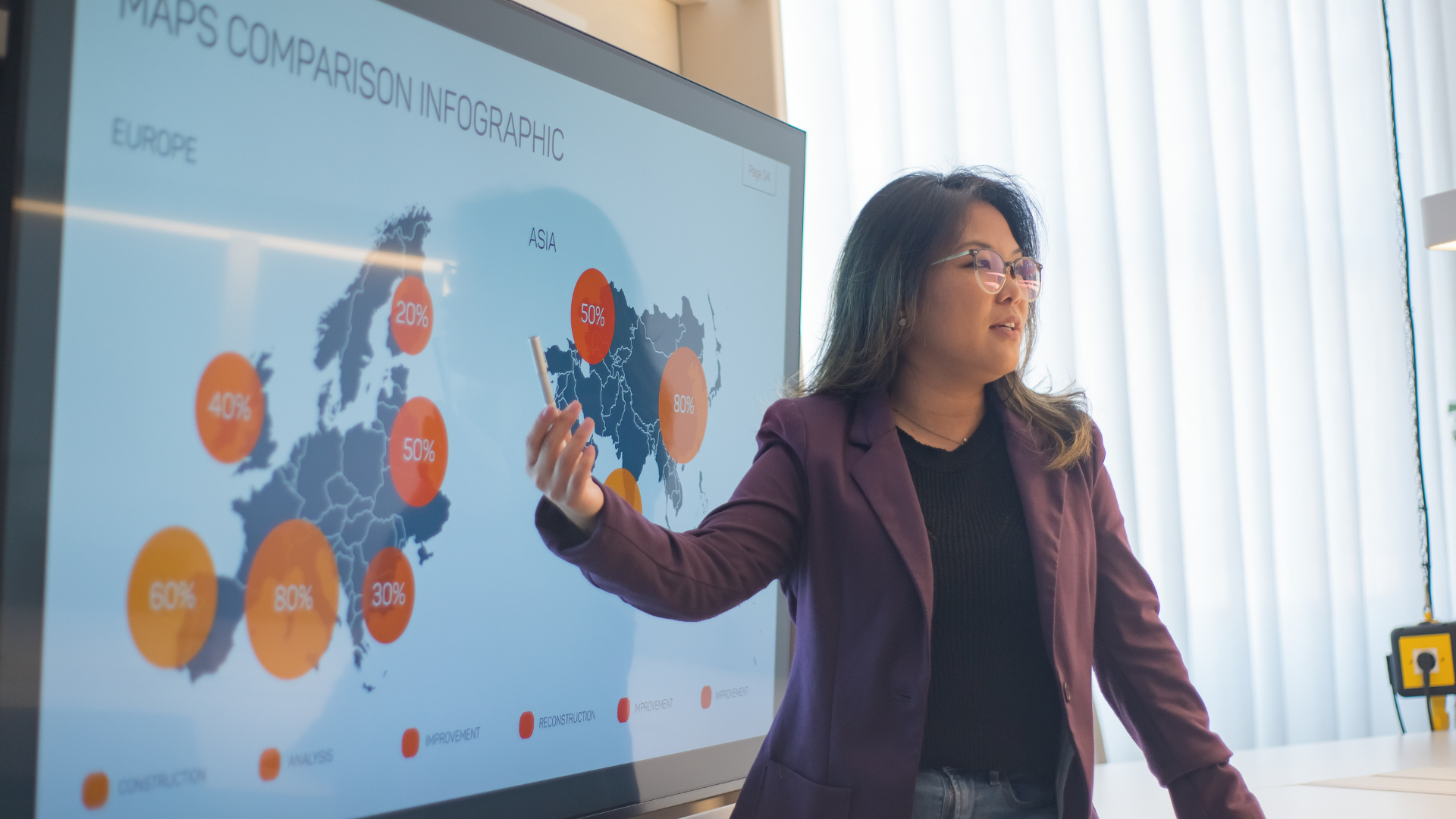
The recommendation should rank markets, not describe them equally
When a company is comparing several countries, the assessment should make the trade-offs visible. One market may offer stronger demand but higher entry costs. Another may have a smaller customer base but a better partner ecosystem. A third may fit the product but require changes the company cannot fund this year.
A ranked shortlist helps the team decide where to focus first. It should explain why the leading market is ahead, what would change the ranking and which markets should be monitored rather than pursued now.
The recommendation does not need to pretend that the evidence is perfect. It needs to state the confidence level and the assumptions that still require testing. A clear “proceed with a pilot”, “adapt the offer before entering” or “do not prioritize this market yet” is more valuable than a neutral description of every country.
Research should lead to a route to market
The final section of an opportunity assessment should not be a generic conclusion. It should connect the evidence to an entry model and a sequence of actions.
For one company, the next move may be ten buyer interviews and a focused B2B agenda. For another, it may be a distributor search, a regulatory review or a local pilot. A public agency may need a target list of investors, a value proposition for the territory and an outreach plan. The action depends on the decision question and the evidence collected.
Gedeth’s Internationalization Plan follows this logic through internal company analysis, market selection and objectives, resources and marketing mix, a PEST framework and an action timeline. The structure connects the external market with the company’s capacity and the work required to move forward.
That is the point where market intelligence becomes useful to the commercial team. It tells them which customers to approach, which partners to evaluate, what message to use and what result should justify the next investment.
Ready to turn research into action?
Plan your entryGedeth’s research work connects evidence with implementation
Gedeth Research Center describes its work as sector studies, market analysis, international benchmarking, investment barometers and tailored research. Its public description includes questionnaire design, database development, stakeholder interviews and data analysis for companies and promotion agencies.
That combination matters because the value of an assessment is not the number of pages it contains. It is whether the research produces a sharper decision and a practical next step. The same principle applies to Gedeth’s Global Study 2026, which reached more than 50,000 professionals and gathered responses from 84 countries. The scale of a study matters only when its findings are interpreted for a defined strategic question.
A decision-ready opportunity assessment should leave the reader able to answer five questions: Is there a credible opportunity? Does it fit our company? What could prevent entry? Which market or segment should come first? What should we do in the next 90 days?