
Venezuela is a large, urbanized economy with substantial natural resources, a population of approximately 28.5 million and a GDP close to $100 billion in 2025, according to World Bank data and a USDA country guide. Headline recovery figures coexist with very high inflation, restricted finance, infrastructure weaknesses and a complex sanctions environment.
For international companies, Venezuela is not one single opportunity. Conditions vary by sector, location, customer and counterpart. Local validation is essential before treating a market signal as a business case.
Venezuela at a glance
Venezuela’s economy remains shaped by oil, but activity is broader than oil
Venezuela has the world’s largest proven crude oil reserves. The OPEC Annual Statistical Bulletin reports 303.2 billion barrels at the end of 2024 and average production of approximately 921,000 barrels per day in 2024. The gap between resource size and current output points to both potential and the capital, technology and infrastructure needed to unlock it.
Oil remains central to public revenue, exports and foreign-currency availability. Yet the Central Bank of Venezuela reported 8.66% annual GDP growth in 2025 and 7.07% year-on-year growth in the fourth quarter. Oil activity grew 13.41%, while non-oil activity grew 5.30%, with growth also reported in construction, mining, commerce, transport, manufacturing and agriculture.
The IMF country page gives a more cautious outlook, listing 4.0% projected real GDP growth and 387.4% projected consumer price growth for 2026. Growth and purchasing power are not the same thing.
Recovery
Constraint
The country has a large urban market, but purchasing power is uneven
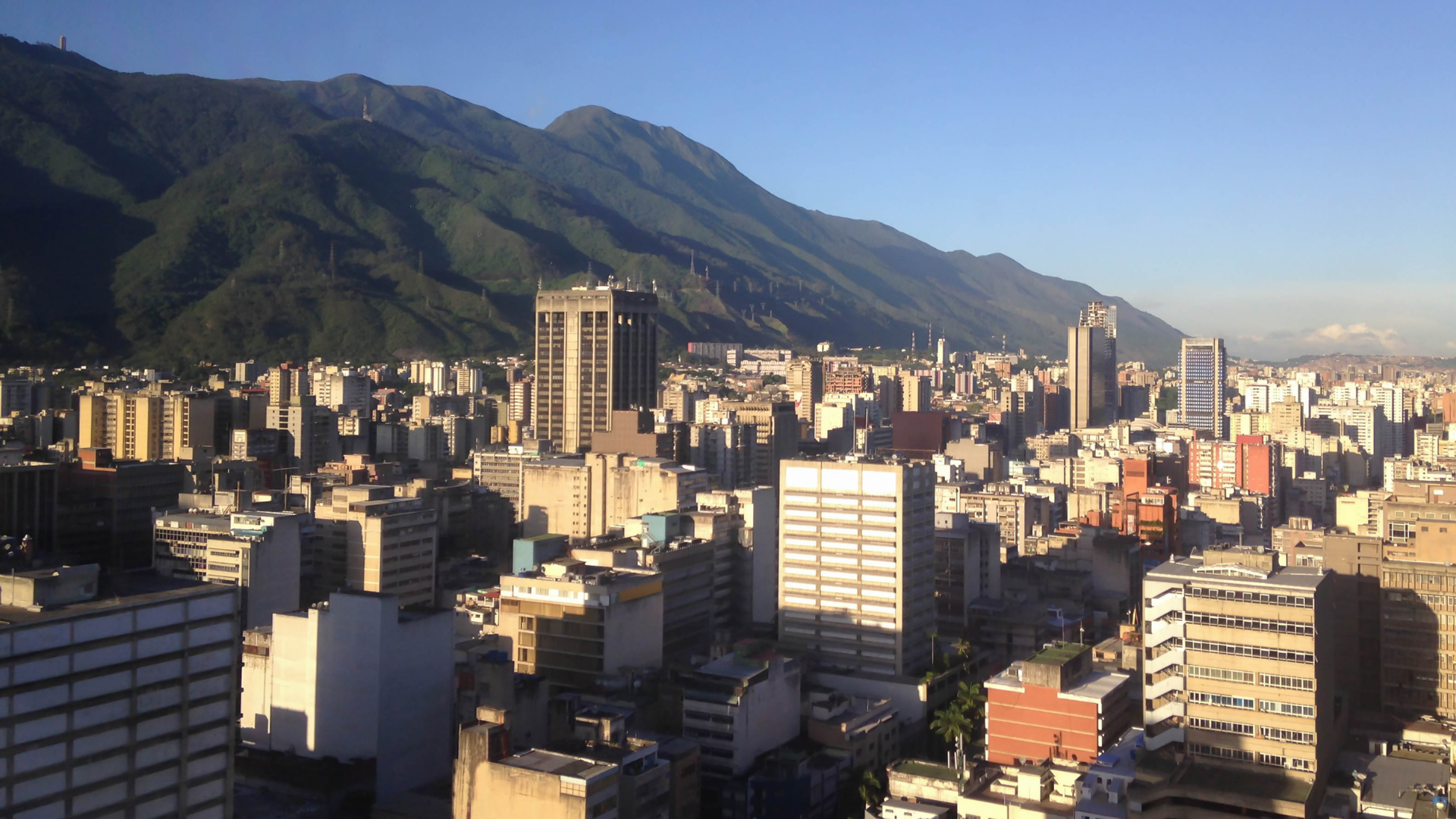
World Bank data puts Venezuela’s 2025 population at 28.5 million and its urban population at 89%. This concentration helps companies plan distribution and sales coverage, but a national launch cannot be designed from Caracas alone. Purchasing power, logistics and customer profiles vary by territory, so the first phase should identify specific cities, customer groups and channels.
Consumer demand is sensitive to price, availability and reliability. The 2026 USDA exporter guide estimates that households allocated around 60% of spending to food, proteins and essentials in 2025. It estimates food retail at $4.1 billion, food service at $1.0 billion and food processing at $2.7 billion.
The same guide describes a mixed retail system: bodegas accounted for an estimated 59% of food retail purchases and supermarkets 41%. The right importer or distributor can therefore matter as much as the product.
Food, manufacturing and services offer different entry routes
Food and agricultural products are among the clearest areas of current commercial demand. The USDA guide reports approximately $2.5 billion in agricultural imports in 2025 and $758 million in U.S. agricultural exports. It identifies food preparations, dairy, pet food, bakery products, confectionery, spices, sauces and selected proteins as areas of interest.
Food is not simple: imported goods can be expensive, and registration, labeling, customs and sanitary requirements affect time to market. Companies should confirm the exact rules for the product before quoting delivery times.
Manufacturing and industrial services can address capacity, downtime and productivity. The BCV’s figures point to possible demand for machinery, maintenance, engineering, industrial software, logistics equipment and technical services. The route may be a distributor, local operator, project partnership or service agreement.
Digital demand is also meaningful. DataReportal recorded 17.5 million internet users, 22.5 million mobile connections and 15.1 million social media user identities in January 2025. Digital companies still need to validate payments, connectivity, support and affordability.
Trade is active, but access depends on the product and the route
Venezuela continues to trade with the United States, Latin America, Europe and other markets. The U.S. Trade Representative reports estimated 2025 U.S. goods and services trade of $8.4 billion, including $6.7 billion in goods and $1.7 billion in services.
Commercial channels remain active, but product registration, customs, foreign exchange, payment routes, insurance, logistics and counterparty risk shape each project.
For companies entering from Spain, Colombia, the United States, Canada or another market, the first commercial question should be specific: which customer, which product, which city, which local partner and which transaction structure? A general country report is useful for framing that question. It cannot answer it by itself.
Key questions for entering the Venezuelan market
- Which customer
- Which product
- Which city
- Which local partner
- Which transaction structure
Foreign investment is still selective and needs careful interpretation
UN Trade and Development’s 2026 Venezuela fact sheet records net inward FDI of minus $367 million in 2025, following minus $2.328 billion in 2024. At the same time, announced greenfield projects rose from 94 to 557. Announced projects measure interest or planned activity, while FDI flows reflect realized cross-border investment and can also reflect restructuring or divestment.
The difference between announced interest and realized investment is important for companies. Venezuela may generate strong conversations in sectors such as energy, infrastructure, food, industrial services and technology, while still requiring a staged approach before capital is committed. Market intelligence, partner due diligence and a clear pilot can reveal whether an opportunity is ready for a contract, a test shipment, a local representation agreement or a larger investment.
The operating environment requires compliance and local knowledge
The regulatory environment remains dynamic. The United States maintains Venezuela-related sanctions, including general licenses and specific licensing guidance. Canada maintains targeted sanctions related to Venezuela, including an asset freeze and dealings prohibition concerning listed persons, with permit mechanisms for exceptional cases.
Companies must check ownership and control, banks, insurers, logistics providers, state-owned entities, payment mechanisms and the laws that apply to their own nationality and transaction. A local introduction is valuable, but it does not replace sanctions screening, legal advice, tax review or commercial due diligence.
The safest entry strategy is usually the one that makes the first decision smaller and more specific. A company can begin with a market assessment, map the value chain, speak with qualified buyers or partners, test a limited commercial route and measure what happens before building a permanent structure.
A Venezuela overview is the starting point, not the decision
Venezuela combines resources, demand and recovery potential with inflation, infrastructure gaps, financing constraints and regulatory complexity. That combination creates opportunities for companies that solve a defined problem and understand how business is actually done in the market. It also creates expensive mistakes for companies that treat a positive macroeconomic headline as proof of readiness.
Gedeth’s internationalization planning and market intelligence work can help turn a broad country question into a defined entry hypothesis. For projects connected to Venezuela’s wider economic recovery, Rebuild Venezuela provides a platform focused on connecting international capital, expertise and strategic partners with local needs.
The right conclusion is neither that Venezuela is closed nor that it is ready for every investor. It is that companies should assess the country by sector, location, counterpart and transaction, then decide whether the evidence supports a conversation, a pilot or a larger commitment.
This article provides a general economic and commercial overview. It is not legal, tax, sanctions, investment or financial advice. Figures are attributed to the source and date available at the time of writing. Companies evaluating activity in Venezuela should obtain advice specific to their sector, nationality, counterparties and transaction structure.