
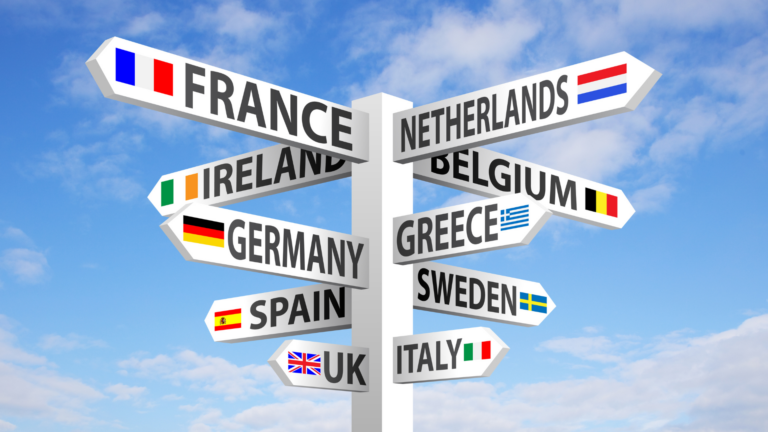
Europe is often described as a mature market, stable, regulated, and slow. That narrative was already incomplete before 2026. This year it is actively misleading. A continent of 450 million consumers, $32 trillion in combined GDP, and three simultaneous structural transformations, in defence, energy, and digital infrastructure, is generating a wave of business opportunities that rewards companies willing to look beyond the headline growth figures.
The euro area expanded just 0.8% year-on-year in Q1 2026, held back by Germany, France, and Italy. But beneath that aggregate, a different picture emerges: Spain growing at 2.8%, Poland at 3.1%, Ireland above 3%, and the Baltic states accelerating. The gap between Europe’s fastest and slowest economies is as wide as it has been in a generation, and that gap is precisely where the opportunity lies.
Why this year is different: three structural forces rewriting European demand
Defence rearmament
Europe’s security spending is undergoing the most dramatic structural shift in decades. EU member states reached €343 billion in total defence expenditure in 2024 — equivalent to 1.9% of GDP — and the 2025 estimate puts that figure above €390 billion. The EU has activated the national escape clause for 17 member states, allowing them to increase defence budgets by up to 1.5% of GDP annually through 2028 without breaching fiscal rules. A dedicated €150 billion SAFE instrument and a €1.5 billion European Defence Industry Programme are funding joint procurement and industrial scale-up across the continent.
For companies in aerospace, cybersecurity, logistics, engineering, advanced manufacturing, and dual-use technology, the pipeline of contracts and tenders is the largest Europe has seen in decades — and it is accelerating.
The green and digital transition
NextGenerationEU, the EU’s €800 billion post-pandemic recovery fund, expires in 2026. Its successor — a new Multiannual Financial Framework for 2028–2034 — is being negotiated now, with a Competitiveness Fund targeting €67 billion for clean industrial transitions and a near doubling of Horizon Europe to €175 billion. The window between these two frameworks is creating urgency: companies and governments are rushing to deploy remaining RRF funds before the deadline, generating procurement activity across renewable energy, infrastructure, digitalization, and industrial decarbonization.
A shifting growth map
The EU’s growth engine is no longer Berlin or Paris. Spain, Poland, Portugal, and Ireland are growing at two to four times the pace of Germany and France. For companies selecting where to establish a European presence, the calculus has changed significantly.
Country by country: where the opportunities are
Germany — $5.3 trillion economy, 0.9% growth forecast
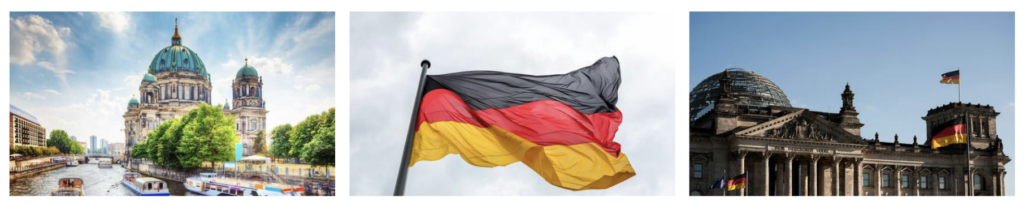
Germany remains Europe’s largest economy and its most complex market. GDP growth in 2026 is forecast at just 0.9%, dragged down by high energy costs, structural industrial challenges, and competition from Chinese manufacturers in key export sectors. But the picture is not uniformly bleak.
The €100 billion special defence fund created in 2022 is generating sustained procurement across the defence industrial base — benefiting suppliers across the automotive, engineering, and electronics value chains. Berlin continues to be a leading European startup hub, particularly in fintech, healthtech, and deep tech. Munich anchors high-tech industrial demand, and Frankfurt remains the continent’s primary financial centre outside London.
The opportunity in Germany in 2026 is less about GDP momentum and more about long-term anchoring: companies that establish here gain access to Europe’s most sophisticated industrial procurement network and a customer base that values quality and long-term supplier relationships above all else.
Sectors to watch: defence supply chain, industrial automation, cybersecurity, cleantech, professional and financial services.
Spain — $2.1 trillion economy, 2.4% growth forecast
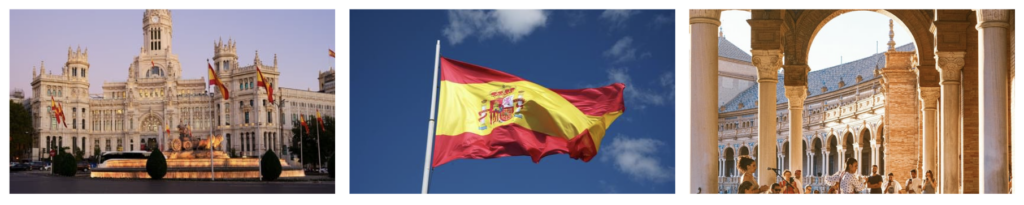
Spain is the eurozone’s standout performer in 2026. Growing at nearly three times the pace of Germany and France, it has become the continent’s fastest-growing major Western economy. Unemployment has fallen to 10.5%, the lowest since 2008. Domestic demand contributed 3.4 percentage points to 2025 GDP growth, supported by rising real wages and the rollout of Next Generation EU funds.
Spain is also Europe’s leading recipient of EU recovery funding in per capita terms, which is directly fuelling infrastructure, renewable energy, and digital transformation investment. The country holds the world’s highest solar irradiation in Europe and is scaling wind and solar capacity aggressively. Tourism — already one of the largest in the world — continues to expand, with services exports growing well above GDP.
For international companies, Spain combines genuine macroeconomic momentum with lower operating costs than Northern Europe, strong infrastructure, and a unique advantage: its cultural and commercial proximity to Latin America, making it a natural bridge market for companies with transatlantic operations.
Sectors to watch: renewable energy (solar and wind), tourism and hospitality technology, agri-food, digital services, real estate and infrastructure.
Netherlands — $1.2 trillion economy, stable but strategic

The Netherlands punches well above its weight as a business destination. Rotterdam is Europe’s largest port. Amsterdam Schiphol remains one of its principal air hubs. The country’s digital infrastructure is among the most advanced globally, and its regulatory environment — while demanding — is transparent and predictable.
Dutch tax incentives, particularly the WBSO R&D credit (which gives qualifying companies a 40% tax reduction on the first €380,000 in R&D labour costs for starters in 2026), make it one of the most attractive destinations in Europe for innovation-intensive companies. The country is a recognised European leader in circular economy, sustainable agriculture, agri-food technology, and water management — sectors that are increasingly driving global demand.
For companies looking to establish a European distribution or headquarters hub, the Netherlands offers logistics reach, financial sophistication, and regulatory clarity that few markets can match.
Sectors to watch: agritech and food innovation, logistics and distribution, fintech, circular economy solutions, water and environmental technology.
Cross-cutting opportunities across Europe
Beyond individual country dynamics, three sector themes cut across the continent and deserve attention regardless of the specific market a company is targeting.
- Cybersecurity and data infrastructure — GDPR compliance, AI regulation under the EU AI Act, and the surge in defence and government digitalization are creating sustained demand for cybersecurity, data governance, and cloud infrastructure services across all member states.
- Healthcare and ageing population — Italy, Germany, France, and Spain are all facing demographic pressure that is reshaping demand for healthcare services, medical technology, senior housing, and wellness solutions. The opportunity is large, long-horizon, and structurally driven.
- Sustainable food and agri-food innovation — European consumers lead globally in demand for sustainable, traceable, plant-based, and premium food products. The Netherlands, Germany, Spain, and France are the primary markets, but demand is growing across the continent.
What companies need to know before entering Europe
Europe is not a single market in practice, even if it is one on paper. Regulatory frameworks, consumer behaviour, language, distribution structures, and procurement processes vary substantially from country to country. Companies that treat Europe as monolithic consistently underperform against those that pick their entry point carefully and build from a specific national base.
The most effective approach follows a consistent pattern: select the market where your sector alignment and cost structure fit best; identify local partners or distributors with genuine commercial reach; understand the specific certification and regulatory requirements for your product or service before arriving; and use structured B2B programmes — trade missions, sectoral events, public tender processes — to build relationships efficiently rather than through cold outreach.
At Gedeth Network, we help companies across all stages of international expansion into Europe, from market selection and validation to partner identification, operational setup, and commercial representation. With offices in Madrid, Barcelona, Delaware, Singapore, Sydney, Guatemala, and Buenos Aires, and a partner network spanning more than 75 countries, we bring local knowledge and global reach to every engagement.
If you are considering Europe as part of your international growth strategy, contact our team to discuss how we can support your expansion.