
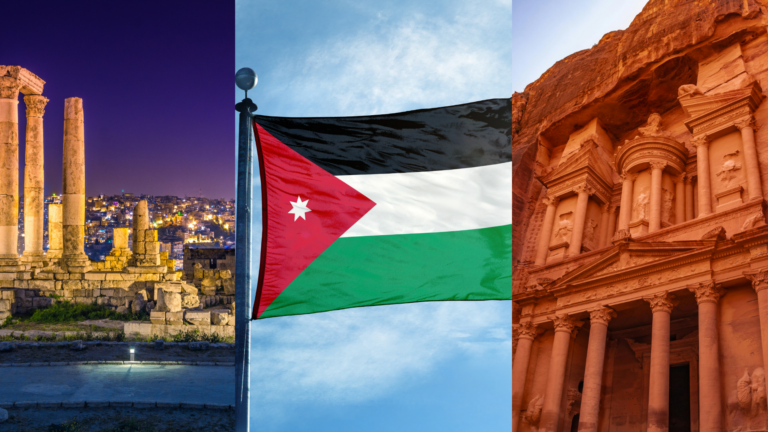
The Jordan economy 2026 makes a compelling case on its own terms — before a single word is said about its neighbourhood. The world’s second-largest producer of potash. The Arab world’s largest pharmaceutical industry. The Middle East’s number one medical tourism destination. A free trade agreement network covering the US, EU, UK, Canada, and the entire Arab League. A USD-pegged dinar that has held its peg since 1995. And an IMF programme — a four-year Extended Fund Facility worth $1.3 billion — that completed its fourth review in December 2025 with all quantitative targets met.
The regional context is real and should be acknowledged clearly: Jordan operates in one of the most geopolitically complex neighbourhoods in the world, and any company doing its due diligence will factor that into its risk assessment. What the data shows, however, is that Jordan has been doing exactly that for decades — maintaining macroeconomic stability, a functioning institutional framework, and consistent economic growth through multiple regional crises that would have destabilised most economies. The Jordan economy 2026 grew 2.7% in the first half of 2025, with the IMF projecting 2.9% for 2026 and 3% by 2030. The case for Jordan does not rest on what might happen to its neighbours. It rests on what Jordan has already built — and what it is building next.


Jordan Economy 2026: GDP Growth and Economic Outlook
The Jordan economy 2026 is on a measured but consistent upward trajectory. Real GDP grew 2.8% in Q2 2025, driven by manufacturing, agriculture, transportation, communications, and financial services. The International Monetary Fund projects 2.9% growth for 2026, rising to 3% by 2030 as the government’s Economic Modernization Vision 2033 — which targets $41 billion in investment and one million new jobs over a decade — begins to deliver structural returns. National exports grew approximately 10% in 2025, with the export-to-import coverage ratio improving to between 57% and 60%, reflecting genuine competitiveness in phosphates, potash, fertilisers, and garments even under regional logistics pressure.
The macroeconomic framework is Jordan’s most underappreciated asset. The Jordanian dinar (JOD) has been pegged to the US dollar since 1995 — a 30-year track record of monetary stability that eliminates currency risk for USD-denominated investors. Inflation is projected at 2.3% for 2026, anchored by the Central Bank of Jordan’s consistent policy discipline. The IMF’s four-year Extended Fund Facility (EFF) arrangement, approved in January 2024 with access of approximately $1.3 billion, completed its fourth review in December 2025 with all quantitative targets met. International reserves are strong and the banking sector is stable. These are not aspirational indicators — they are the result of sustained institutional commitment to fiscal and monetary discipline across multiple administrations.
The government has issued approximately 1,000 economic, administrative, and incentive decisions since taking office — covering real estate, transportation, ICT, and industrial policy — creating what Jordanian economists describe as the most concentrated reform period in the country’s recent history. The EBRD projects 2.8% growth in 2026 and 2.9% in 2027. Gulf investment interest is growing: the UAE has committed $2.3 billion to a railway project linking Aqaba port to the potash and phosphate mines, due to be operational by 2030. Major projects are scheduled to begin early in 2026, which economists expect to mark “the beginning of positive returns” from the government’s policy decisions.
“Jordan’s continued macroeconomic stability and resilience amid persistent external headwinds are a testament to the authorities’ steadfast pursuit of sound policies. Growth continues to recover, inflation remains low, and reserve buffers are strong. Jordan’s economic program supported by the EFF arrangement remains firmly on track.”
— IMF Executive Board · Fourth Review under the Extended Fund Facility · December 2025
Sectors with the Greatest Growth Potential

Fertilisers

Life Sciences

Healthcare

Business Services
Critical Minerals and Fertilisers
Jordan’s mineral position is structurally significant and globally relevant. The country is the world’s second-largest producer of potash, with over 20% of global reserves concentrated in the Dead Sea region. It holds the fifth-largest phosphate reserves in the world at 3.7 billion tonnes, and is the world’s first exporter and fifth-largest producer of phosphate, with annual production capacity exceeding 7 million tonnes. These are not niche commodities — potash and phosphate are the two foundational inputs for global fertiliser production, making Jordan’s mineral base a strategic asset in the context of global food security. The Arab Potash Company (ASE-APOT) and the Jordan Phosphate Mines Company (ASE-JOPH) are among Jordan’s largest listed companies by revenue. A $2.3 billion UAE-funded railway project will connect the Port of Aqaba to the Shidiyah and Ghor al-Safi mines by 2030, significantly improving logistics and export capacity. For international companies in fertiliser production, mining equipment and technology, logistics, and critical minerals processing, Jordan’s mineral endowment creates a long-duration commercial relationship that is entirely independent of regional political dynamics.
Pharmaceuticals and Life Sciences
Jordan houses the largest pharmaceutical industry in the Arab world — a sector that has grown consistently and now exports approximately $2.2 billion annually to over 60 countries. Key markets include Saudi Arabia, Iraq, Algeria, the United States, Brazil, Australia, and China — a geographic diversification that reflects both the quality of Jordanian pharmaceutical manufacturing and the strength of its regulatory approvals across multiple international frameworks. Jordan’s pharmaceutical companies hold US FDA, European EMA, and WHO GMP certifications, enabling direct market access to regulated markets that most regional competitors cannot reach. The sector operates from industrial parks in Amman and Zarqa equipped to international standards. For international pharmaceutical companies evaluating the Middle East and North Africa as a production or distribution base, Jordan offers a combination of regulatory credibility, skilled scientific workforce, Arabic-language market reach across 22 Arab League countries, and FTA access to the US and EU that no other Arab country can match simultaneously.
Medical Tourism and Healthcare
Jordan is ranked the number one medical tourism destination in the Middle East and fifth globally by the World Bank — a position built on genuine clinical capability rather than marketing. The country receives over 220,000 foreign patients annually, primarily for oncology, cardiac surgery, orthopaedics, and fertility treatment, from patients across the Arab world, Africa, and Central Asia who choose Jordan for its combination of world-class clinical standards, Arabic-language care, and costs significantly below Western alternatives. The King Hussein Cancer Centre in Amman is internationally accredited and handles complex oncology cases referred from across the region. For international companies in medical technology, hospital management, health information systems, telemedicine infrastructure, and medical training, Jordan’s established medical tourism ecosystem provides an active, high-value buyer base that is continuously investing in upgrading its clinical and digital infrastructure.
ICT and Business Services
Jordan’s ICT sector contributes approximately 14% of GDP and produces over 70% of Arabic-language web content for the entire Arab region — making Amman the de facto digital content hub for 400 million Arabic speakers. The country ranks 49th on the Global Entrepreneurship Index and has more than 25 business incubators, accelerators, and technology centres. An estimated 98% of ICT companies in Jordan are SMEs, creating a dynamic ecosystem of smaller firms serving both domestic and regional clients. Jordan’s English proficiency, strong university system, and relatively young, educated population provide a talent base for technology services that regional competitors struggle to match. For international technology companies seeking a Middle East base for software development, customer service, digital content production, or regional back-office operations, Amman offers a combination of talent quality, cost competitiveness, and Arabic-language capability that is genuinely difficult to replicate elsewhere in the region.
Trends Redefining the Jordan Economy 2026
Three structural trends are reshaping the commercial landscape of the Jordan economy 2026 in ways that create specific entry opportunities for international companies in 2026 — independent of any regional developments.
Aqaba: One of the Middle East’s Most Competitive Free Zones
The Aqaba Special Economic Zone (ASEZA) offers a combination of fiscal incentives that is genuinely exceptional by regional standards: 0% income tax, 0% sales tax, 0% customs duties, and 100% foreign ownership for qualifying investments. Located on Jordan’s only Red Sea coastline, Aqaba’s port provides direct maritime access to East Africa, South Asia, and Europe via the Suez Canal — and will be connected to Jordan’s potash and phosphate mines by the UAE-funded railway by 2030. For companies in manufacturing, logistics, distribution, and export-oriented production, Aqaba combines free zone fiscal advantages with Jordanian FTA access to the US, EU, and Arab League markets in a way that positions any established business for multi-market reach from a single low-cost operating base.
The Economic Modernization Vision 2033: A Decade-Long Procurement Pipeline
Jordan’s Economic Modernization Vision 2033 targets $41 billion in investment and one million new jobs over ten years, with specific sectoral priorities in ICT, renewable energy, tourism, healthcare, and manufacturing. The government has issued approximately 1,000 policy decisions to support implementation, including administrative reforms, investment incentives, and sector-specific regulatory changes. Gulf investor interest — particularly from the UAE, Saudi Arabia, and Kuwait — is growing, with Gulf investors identified by Jordanian economic experts as increasingly active in energy, transport, and water infrastructure projects. For international companies whose offering aligns with the Vision’s sectoral priorities, the government’s active procurement posture creates a structured and well-funded demand pipeline that does not depend on economic cycles in the way that private sector-driven demand does.
Renewable Energy: Jordan’s Next Export
Jordan imports over 90% of its energy needs — a structural vulnerability that the government is actively addressing through one of the most ambitious renewable energy programmes in the Arab world. Solar irradiation in Jordan is among the highest globally, and wind resources in the northern highlands are substantial. The government has set a target of 50% renewable electricity generation by 2030, and the regulatory framework for private power purchase agreements (PPAs) is in place and functioning. For international companies in solar EPC, wind development, energy storage, smart grid technology, and green hydrogen — Jordan’s geography, its energy import dependency, and its regulatory commitment create a genuine and fundable pipeline of renewable energy projects that will run through the end of the decade regardless of what happens in the broader region.
The Regional Context: Acknowledged Honestly
Any credible analysis of the Jordan economy 2026 must address the regional environment directly rather than avoid it. Jordan borders countries experiencing varying degrees of instability, and the IMF, World Bank, and EBRD all explicitly note “regional tensions” as an external headwind in their Jordan assessments. Tourism — which contributed approximately 15% of GDP in 2023 — was negatively affected in 2024 by regional uncertainty, with European and American arrivals declining while Arab tourist numbers held. The government’s fiscal position, while managed prudently, depends on continued international support — the IMF’s EFF and RSF arrangements, Gulf grants, and US aid — that is itself partly a function of Jordan’s regional strategic importance to its partners.
The honest assessment is this: Jordan’s stability is not passive luck — it is the product of deliberate institutional management sustained across decades and multiple regional crises. The country has maintained its monetary peg, its IMF programme targets, its export growth, and its investment-grade trajectory through circumstances that have destabilised far larger economies. Companies entering Jordan for its minerals, its pharmaceutical sector, its medical tourism infrastructure, or its ICT ecosystem are buying into strengths that exist today and are commercially actionable today. The medium-term regional upside — if and when conditions in neighbouring markets improve — would represent additional return on a position that already makes commercial sense on its own merits. That is the right way to frame it, and it is the frame that protects both the investor and Gedeth’s credibility as an adviser.
Risk framework for entering Jordan: Companies should structure contracts in JOD or USD (the peg eliminates practical distinction), ensure adequate political risk insurance through MIGA or equivalent providers for significant capital investments, engage experienced local legal counsel familiar with both Jordanian commercial law and relevant free zone frameworks, and build contingency planning around potential border closure scenarios for supply chains that rely on land transit through neighbouring markets. None of these risks are prohibitive — they are manageable with the right structure — but they must be planned from day one rather than retrofitted after entry.
Jordan Economy 2026: Macroeconomic Outlook for Investors
The Central Bank of Jordan (CBJ) manages monetary policy within a USD peg framework that has been in place since 1995. The JOD/USD rate of 0.709 has held through the 2008 financial crisis, the Arab Spring, multiple regional conflicts, and the COVID-19 pandemic — a 30-year record of stability that is among the most consistent in the emerging market universe. Inflation is projected at 2.3% for 2026, in line with US inflation trends as imported price pressures moderate. The CBJ began a rate-cutting cycle in September 2024 in line with the US Federal Reserve, supporting domestic consumption and investment while preserving the peg.
Public debt stands at approximately 91% of GDP in 2026, elevated by regional standards but on a downward trajectory under the IMF programme, which targets 80% of GDP by 2028. The fiscal primary balance is improving, driven by robust revenue collection and current spending discipline. Foreign reserves are strong and above IMF adequacy thresholds. For investors, the combination of USD-pegged currency, IMF programme discipline, growing export revenues, and Gulf investment commitment creates a macroeconomic environment that is considerably more stable than Jordan’s geographic location might suggest to an uninformed observer. The Jordan economy 2026 has earned its stability — it has not inherited it.
Conclusions
The Jordan economy 2026 is a market that rewards companies willing to read beyond the regional headlines. The world’s second-largest potash producer. The Arab world’s pharmaceutical export leader. The Middle East’s premier medical tourism destination. A 30-year USD peg. A functioning IMF programme. FTAs covering 1.5 billion consumers. Aqaba’s free zone offering 0% income tax and 0% customs duties. A renewable energy pipeline running through 2030. A government that has issued 1,000 reform decisions in a single year and is actively courting the Gulf investment it needs to fund the next phase of its Economic Modernization Vision.
None of these strengths are contingent on what happens in Jordan’s neighbourhood. All of them are actionable today, by companies with the right offering and the right risk framework. The regional context is real and must be managed professionally — but it does not define the commercial case for the Jordan economy 2026. Jordan’s own story does that, and it is a stronger story than most international companies have taken the time to read.
Want to understand Jordan before deciding?
Before any market entry decision, the right question is whether the opportunity matches your company’s specific profile. Gedeth Network offers a Jordan market intelligence briefing — covering sector fit, entry structure, risk framework, and current investor activity — so you can make an informed decision with the full picture.
Request a Briefing