
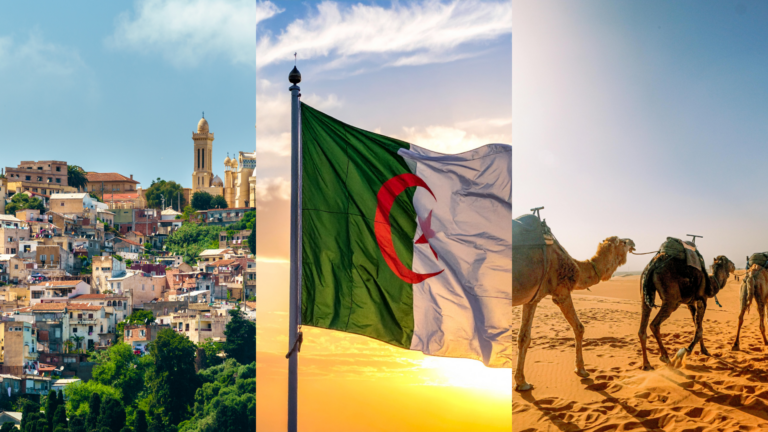
The Algeria economy 2026 has a paradox at its core that most international companies have not resolved: it is the largest economy in the Maghreb, the fourth largest in Africa, and growing at 3.8% according to the IMF — yet its domestic consumer market is among the most underserved by international private sector companies in the entire Mediterranean region. A population of 48 million people, a median age of 28, rising public sector wages, subsidised energy and food prices, and a young urban middle class with growing purchasing power — and in sectors like agri-food processing, construction materials, healthcare, and telecommunications, demand consistently runs ahead of what domestic producers and state-owned enterprises can supply.
The reason is well understood: until recently, a regulatory framework requiring Algerian majority ownership in most foreign investment, combined with import restrictions and bureaucratic complexity, made market entry genuinely difficult. The Investment Law 22-18 changed this. For sectors including agri-food, construction, and telecommunications, foreign investors can now establish fully-owned subsidiaries. The one-stop-shop registration process has been simplified. Tax incentives for qualifying investments have been codified clearly for the first time. The Algeria economy 2026 is not yet easy — but for the first time in a decade, it is structurally open in ways it was not before, and the domestic demand that was always there is now accessible.


Algeria Economy 2026: GDP Growth and Economic Outlook
The Algeria economy 2026 is growing faster than most comparable African economies and faster than the IMF’s own global average. The IMF revised its 2026 growth forecast for Algeria upward to 3.8% in April 2026 — an upward revision of 0.9 percentage points from its October 2025 estimate — specifically noting that this performance is “all the more noteworthy given the complexity of the current global economic environment.” This places Algeria first in the Maghreb and fourth across Africa in nominal GDP terms, with a total economic output of $317.17 billion in 2026. On a purchasing power parity basis, Algeria’s GDP for 2026 is estimated at $941.54 billion — reflecting the significant domestic price controls and subsidies that make the real purchasing environment meaningfully larger than the nominal figure suggests.
The growth composition is the key commercial signal. Non-extractive GDP growth has been the primary driver in recent years, supported by resilient agricultural output, rising household consumption following public sector wage increases, and growing private investment. Hydrocarbon GDP, by contrast, has been constrained by OPEC+ production quotas and weaker European gas demand. This means the growth that is happening in the Algeria economy 2026 is concentrated precisely in the sectors — services, food, construction, healthcare, and consumer goods — where private sector and international company participation is most commercially relevant. The structural story and the commercial opportunity are pointing in the same direction.
The fiscal position requires honest acknowledgement. Algeria’s budget break-even oil price is approximately $142 per barrel — well above the $60 per barrel average expected for 2026. This means the government is running significant fiscal deficits, financed primarily through domestic debt following the depletion of the Revenue Regulation Fund in 2024. Public debt is rising, the current account deficit is widening, and the government has limited room for expansionary public spending. For international companies, this fiscal context has a specific commercial implication: government procurement timelines are slower and less reliable than in the Gulf states, and the most resilient commercial opportunities are in the private consumer market and in sectors where the government has incentivised private investment as a substitute for public spending.
“Algeria’s economy is expected to maintain its positive momentum, with growth reaching 3.8 percent in 2026, up from the 2.9 percent forecast in October 2025, an upward revision of 0.9 percentage points. This performance is all the more noteworthy given the complexity of the current global economic environment.”
— IMF World Economic Outlook · April 2026 (via APS)
Sectors with the Greatest Growth Potential

Housing

Food Processing

Pharmaceuticals

Digital Economy
Construction and Housing
Algeria has one of the most acute housing deficits in North Africa. A population that has grown from 35 million to 48 million in fifteen years, rapid urbanisation, and decades of underinvestment in private residential construction have created a structural housing gap that the government has been unable to fill through public programmes alone. The construction sector contributes notably to GDP and has been identified by the government as a priority for private sector involvement. Under the new Investment Law 22-18, foreign investors can establish 100% foreign-owned companies in construction — removing the previous requirement for an Algerian majority partner. Public investment in transport infrastructure has been substantial: the African Development Bank granted a EUR 747 million loan in December 2025 for the first phase of a railway connecting Algiers to Tamanrasset, and a $60 billion hydrocarbon investment plan through 2029 includes the new Hassi Messaoud refinery and petrochemical infrastructure. For international companies in construction materials, civil engineering, modular housing systems, building technology, and infrastructure project management, the Algerian pipeline is one of the largest and least competitive in North Africa.
Agri-food and Food Processing
Algeria imports a significant share of its food requirements — cereal imports remain high, soft wheat is the primary staple and heavily import-dependent, and the government has a stated strategic goal of reducing the annual food import bill through domestic production expansion. The “Strategic Plan for the Development of Cereal Production in Algeria 2023–2028” specifically targets soft wheat, maize, sugar, and oilseeds. Agriculture contributes 13.1% of GDP and employs 9% of the workforce — but productivity is far below potential. Under Investment Law 22-18, agri-food is now open to 100% foreign ownership. Carrefour has successfully established and expanded its retail operations in Algeria, demonstrating that the consumer market is real and that international food and retail companies can operate profitably. For companies in food processing technology, food safety systems, cold chain logistics, greenhouse technology, and packaged food production, Algeria’s combination of large consumer base, high import dependency, government incentives for domestic food production, and newly open FDI framework creates a genuine and well-documented commercial opportunity.
Healthcare and Pharmaceuticals
Algeria’s healthcare system is under strain from a growing and ageing population, a chronic deficit of medical equipment and supplies relative to demand, and a pharmaceutical import bill that the government is actively trying to reduce through local production incentives. Medical equipment is consistently identified by the US Commercial Service as one of the top opportunity sectors for Algeria, and the pharmaceutical sector is expanding to meet both domestic demand and export potential. The government has introduced specific incentives for local pharmaceutical manufacturing, including preferences in public procurement for domestically produced medicines. For international companies in medical devices, diagnostic equipment, hospital technology, pharmaceutical manufacturing, and healthcare management systems, Algeria’s 48 million population and underdeveloped private healthcare infrastructure create a consistent demand signal that is independent of oil price cycles.
Telecommunications and Digital Economy
Algeria has three mobile operators — Mobilis (state-owned), Djezzy (owned by Veon), and Ooredoo — serving a market with high mobile penetration but significant gaps in data infrastructure quality and digital service coverage. Under Investment Law 22-18, telecommunications is open to 100% foreign ownership. Internet penetration is growing rapidly, driven by a young population with strong demand for digital services. The ICT sector is emerging as a significant driver of entrepreneurship, with the government actively supporting startup ecosystems through the Algeria Startup Fund and specific tech zone development. For international companies in network infrastructure, software as a service, digital payments, e-commerce platforms, edtech, and healthtech, Algeria’s young demographic profile, rising smartphone penetration, and government support for digital economy development create a consumer market that is growing faster than the technology companies currently serving it.
Trends Redefining the Algeria Economy 2026
Three structural shifts are changing what is commercially possible in the Algeria economy 2026 in ways that were not true two or three years ago.
Investment Law 22-18: The Rule Change That Actually Matters
The most important regulatory development for international companies evaluating Algeria is Investment Law 22-18, which eliminated the requirement for Algerian majority ownership in most non-strategic sectors. Previously, the 51/49 rule — requiring Algerian nationals to hold at least 51% of any foreign joint venture — was the single largest structural barrier to FDI outside the hydrocarbon sector. The new law retains majority ownership requirements only for genuinely strategic sectors (military industry, railways, ports, airports, and specific activities in the pharmaceutical and mining sectors). For sectors including agri-food, construction, and telecommunications — exactly the sectors where the domestic demand gap is largest — foreign investors can now establish fully-owned subsidiaries. This is a genuine structural change, not a rhetorical one, and it fundamentally alters the risk profile of market entry for international companies that previously could not retain operational control.
Rising Household Consumption: The Non-Oil Growth Driver
Algeria’s government has consistently increased public sector wages, the minimum wage, and social transfers — partially as a social stability measure and partially as a deliberate consumption stimulus. The result is that household consumption has been growing faster than overall GDP, creating a consumer market that is expanding even as hydrocarbon revenues stagnate. Food price inflation, which hit vulnerable populations hard in 2022–2023, has moderated significantly following government price controls and stabilising import prices. The overall unemployment rate fell to 12.3% in 2023 (the latest available data), with continued improvement expected. For consumer-facing companies — food brands, personal care, electronics, financial services — the purchasing power trajectory is more positive than the GDP per capita figure alone suggests, because the government’s subsidy programmes effectively expand disposable income in key categories.
Gateway to Africa and Europe Simultaneously
Algeria borders the Mediterranean to the north, giving it proximity to France, Spain, and Italy — its three largest trading partners outside the hydrocarbon sector. It borders Mali, Niger, Libya, Tunisia, Morocco, and Mauritania to its south and east — giving it access to the Sahel and West African markets. Algeria is a member of the African Continental Free Trade Area (AfCFTA) and the Arab Free Trade Area. For international companies designing a North Africa or pan-African market strategy, Algeria’s geographic position — the largest country in Africa by land area, straddling the Mediterranean and Saharan trade routes — makes it a natural regional hub for companies willing to invest in the operational infrastructure required. Companies already established in Spain, France, or Italy have a specific proximity advantage: Algiers is closer to Madrid than Madrid is to Barcelona by air, and Algerian-Spanish commercial relationships have a long and well-established institutional history.
Opportunities for International Companies
Algeria’s commercial geography concentrates in three zones. Algiers and the northern corridor (Oran, Constantine, Annaba) is the primary consumer market, the financial and professional services hub, and the location for most manufacturing and agri-food investment. The hydrocarbon zones of the south — Hassi Messaoud, Illizi, In Salah — are the energy sector hub, relevant for companies in oil and gas services, petrochemicals, and the new refinery and methanol plant projects. The agricultural belt of the Mitidja plain and the Tell region is the agri-food production zone, where new greenhouse and precision agriculture investments are being incentivised.
Entry under Investment Law 22-18 involves registering an investment project with the Algerian Investment Promotion Agency (API), which operates a one-stop shop for company registration, permits, and incentive access. Three incentive regimes are available: a general regime offering tax exemptions during the investment phase, an exceptional regime for investments of strategic national interest, and a specific regime for investments in zones with special development priorities. Corporate income tax is 19% for production activities and 26% for services. The Algerian dinar (DZD) is not freely convertible — this requires specific planning for profit repatriation, and working through authorised foreign exchange banks with documented export revenues or approved investment approval is essential from day one.
Barriers to consider: The Algerian dinar is not freely convertible, and repatriation of profits requires adherence to strict foreign exchange procedures — this is the most consistently cited operational challenge for international companies and must be planned structurally from market entry, not retrofitted. Bureaucratic processes, while improving under the new investment law, remain slower than in comparable North African markets such as Morocco. Import restrictions and currency rationing when oil prices are low create supply chain uncertainty for companies dependent on imported inputs. Public procurement remains slow and subject to budget availability tied to hydrocarbon revenues. And the parallel exchange market, which trades at a significant premium to the official rate, creates pricing complexity in sectors where informal economy pricing is significant. None of these barriers are insuperable — they are the operating environment that companies must structure for from day one.
Algeria Economy 2026: Macroeconomic Outlook for Investors
The Bank of Algeria eased monetary policy for the first time since 2020 in August 2025, cutting the key interest rate from 3% to 2.75% and reducing the reserve requirement ratio from 3% to 2% — responding to the deflationary pressures from lower food prices and stable import prices. Inflation slowed to 4.3% in the first nine months of 2024 and is projected at approximately 2.9% for 2026 according to the IMF, a level that is low by regional standards and supportive of consumer purchasing power. Foreign exchange reserves covering approximately 16.2 months of imports at the end of September 2024 provide a meaningful buffer for the current account pressures expected in 2026.
The fiscal consolidation path is the central medium-term risk. With the Revenue Regulation Fund (the hydrocarbon stabilisation fund) depleted in 2024, deficit financing now relies on domestic debt — creating monetary financing risks if oil revenues remain below the $142 break-even level. The government has indicated fiscal consolidation measures from 2027, but the 2026 deficit is expected to peak before improvement. For companies with USD or EUR revenue structures operating in Algeria, the DZD’s managed exchange rate against the USD provides nominal stability but requires careful treasury management given the parallel market premium. The Algeria economy 2026 is not a macroeconomic story of strength — but it is not a crisis either. It is the fiscal position of a resource-rich economy managing the transition from hydrocarbon dependency, with a consumer market growing independently of the government’s budget situation.
Conclusions
The Algeria economy 2026 is the North African market entry that Ibero-American and European companies have consistently deferred — waiting for conditions to improve, for regulations to simplify, for the FDI framework to open. Those conditions have now materially changed. Investment Law 22-18 has removed the 51/49 majority ownership requirement in the sectors with the largest domestic demand gaps. The IMF has revised growth upward to 3.8% in a year when it revised the global outlook downward. The consumer market — 48 million people, median age 28, rising wages — is growing faster than the companies currently serving it. And Algeria’s geographic position as the natural bridge between Mediterranean Europe and sub-Saharan Africa creates a regional platform argument that goes beyond the domestic market alone.
The strategic question for companies evaluating the Algeria economy 2026 is not whether the opportunity exists — it does, and it is large. It is whether your company can structure an entry that navigates the DZD repatriation constraints, the bureaucratic friction, and the public procurement unpredictability while building the local relationships and regulatory knowledge that convert market access into commercial returns. Companies that have done this successfully — Carrefour, Renault, Sanofi, Lafarge — have found a market that rewards patience and penalises companies that expect Algerian conditions to resemble Gulf or European operating environments. The opportunity is real. The entry price is structural commitment, not just capital.
Thinking about entering the Algerian market?
Gedeth Network helps international companies analyse, plan and execute their expansion into Algeria — from regulatory framework assessment and API registration to local partner identification and commercial launch in the Algerian domestic market.
Talk to our team