
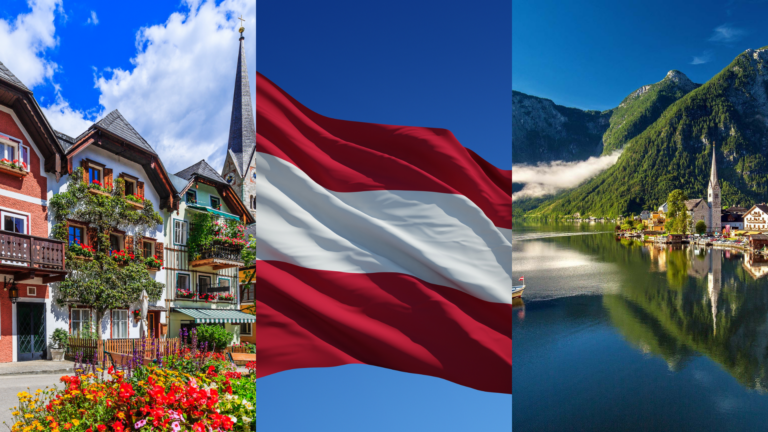
The austria economy 2026 presents a proposition that few countries in Europe can match: a high-income, politically neutral gateway to Central and Eastern Europe, emerging from two years of contraction with structural foundations that have not weakened. Austria’s GDP per capita of $67,761 ranks 17th globally, its capital Vienna hosts 412 multinational regional headquarters, and the Vienna Region sits within a three-hour flight of 500 million consumers. This is not coincidence — it is the product of seventy years of deliberate policy, institutional investment, and a legal framework designed to make Austria the most efficient entry point into the CEE market block.
The reason Austria works for international companies is structural. Political neutrality — enshrined in the Federal Constitutional Law of 1955 — gives Vienna a unique diplomatic status shared only by Geneva among European cities of comparable business sophistication. The Austrian Business Agency (ABA) provides free government-backed support for company establishment. Group taxation rules allow holding companies to offset CEE subsidiary losses against Austrian taxable income. And a network of over 90 double taxation treaties makes cross-border profit repatriation straightforward. The austria economy 2026 is not yet growing at its full potential — the IMF projects 0.7% and the OECD 1.1% — but the structural case for Austria as a regional headquarters and CEE gateway has never been stronger, and the domestic demand recovery now underway is adding a consumer market dimension that complements the traditional HQ and logistics proposition.


Austria Economy 2026: GDP Growth and Economic Outlook
The austria economy 2026 is recovering from a two-year contraction cycle that few analysts anticipated when Austria entered 2023 with solid fundamentals. GDP fell in both 2023 and 2024, driven by a combination of external shocks — German industrial weakness, elevated energy costs tied to Middle East supply disruptions, and a broad European manufacturing slowdown. Austria’s industrial sector accounts for approximately 25% of GDP, a higher share than most Western European peers, making it acutely sensitive to external demand cycles. When German orders declined, Austrian manufacturing contracted with them.
The IMF’s April 2026 World Economic Outlook revised Austria’s 2026 growth forecast upward to 0.7%, while the OECD’s June 2026 Economic Outlook projects 1.1%. Neither figure is dramatic, but the direction is unambiguous. The manufacturing PMI crossed back above 50 in Q1 2026 for the first time in seven quarters. Household real wages are rising as inflation moderates toward 2.9%. Tourism — approximately 15% of Austrian GDP — is tracking record overnight stays for summer 2026. Private consumption is forecast to grow 1.4% in 2026, the strongest reading since 2022.
The growth composition matters for international investors. Austria’s recovery is being led by services, domestic consumption, and renewed FDI inflows — precisely the sectors where foreign company participation is most commercially relevant. The austria economy 2026 is not a commodity recovery dependent on a single price variable; it is a broad-based resumption of high-value-added economic activity that has always been Austria’s core competitive proposition.
The fiscal position requires context. Austria’s government deficit reached 4.2% of GDP in 2025, placing the country under EU Excessive Deficit Procedure monitoring. The government has committed to a consolidation path targeting a return below 3% by 2027–28, implying some restraint on public co-investment in 2026. For international companies, this has a specific implication: projects dependent on public co-financing should build in longer approval timelines. Private investment conditions — corporate tax rates at 23%, credit availability, and regulatory stability — are unaffected.
“Austria’s economy is expected to return to positive growth in 2026, with the recovery supported by easing monetary conditions, recovering real household incomes, and renewed foreign direct investment inflows into the Vienna Region.”
— OECD Economic Outlook, June 2026
Austria Economy 2026: The Strategic Case as a CEE Gateway
No single factor explains Austria’s enduring appeal to multinational companies better than its geography amplified by its political neutrality. Vienna sits at the geographic centre of Europe — equidistant between the Atlantic coast and the Ukrainian border — and its international airport connects to 17 Central and Eastern European capitals with direct daily flights. The Vienna Region’s assertion that 500 million consumers are reachable within a three-hour flight is logistics reality confirmed by aviation route data. For any company managing a multi-country CEE distribution or sales network, Austria’s centrality translates directly into reduced travel costs, faster response times, and a single timezone that conveniently overlaps with both London and Kyiv.
Austria’s permanent neutrality, enshrined in the Federal Constitutional Law of October 1955, has made Vienna home to one of only four United Nations headquarters globally, alongside New York, Geneva, and Nairobi. The city also hosts the headquarters of OPEC, the OSCE, the IAEA, and more than 40 other international organisations. This concentration of multilateral institutions creates a uniquely sophisticated ecosystem: diplomatic talent pools, multilingual senior professionals, and a service infrastructure designed for cross-border transactions in politically sensitive environments. For companies operating in energy, defence supply chains, financial services, or emerging market development finance, Vienna’s neutrality is a material risk management advantage.
The structural underpinning of Austria’s role as a CEE hub is the 412 multinational companies that have established their Central and Eastern European regional headquarters in the country. This figure, tracked by the Austrian Business Agency (ABA), has grown steadily over two decades and includes Boehringer Ingelheim, Takeda, Siemens, Infineon, Intel, and Red Bull. The network effect is significant — when a critical mass of multinationals already operates their CEE functions from Vienna, the ecosystem of suppliers, service providers, and talent matures accordingly. New entrants benefit from this accumulated infrastructure on day one.
Sectors with the Greatest Growth Potential in the Austria Economy 2026

Professional Services

Biotech & Tech

CEE Infrastructure

Talent Attraction
Corporate HQs and Professional Services
Austria hosts 412 multinational companies that have established their Central and Eastern European regional headquarters in the country, a figure that has grown consistently over two decades and now represents a self-reinforcing ecosystem. The ABA provides free government-backed support for new establishment: company registration, tax structure advice, real estate sourcing, and talent recruitment connections. In 2024, ABA facilitated 276 new international company setups. Austria’s group taxation rules — allowing holding companies to offset foreign subsidiary losses against Austrian taxable income — combined with a corporate income tax rate of 23% (reduced from 25% in the 2024 reform) and 90+ double taxation treaties, create a fiscal architecture for regional structures that is among the most competitive in the EU.
Life Sciences, Biotech and Technology
Austria invests 3.34% of GDP in research and development, with Vienna specifically reaching 4.04%, placing the country 8th on the European Innovation Scoreboard 2025. The Vienna BioCenter is one of Europe’s leading life sciences clusters, combining research institutes, university spin-offs, and established pharma and medtech companies. For international companies in medical devices, diagnostic equipment, pharmaceutical manufacturing, and healthcare management systems, Austria offers regulatory alignment with EMA standards, a STEM talent pipeline of approximately 40,000 graduates per year, and proximity to Eastern European clinical trial markets where patient recruitment costs are significantly lower than in Western Europe.
Logistics and CEE Infrastructure
Austria’s geographic position at the intersection of the Trans-European Transport Network’s core corridors makes it the natural logistics hub for any company managing a multi-country CEE distribution network. The Danube corridor connects Western European production centres directly to Black Sea ports. Vienna International Airport handled over 31 million passengers in 2024 and operates significant cargo volumes. Rail operator ÖBB operates direct freight connections to 18 European countries. For companies building or restructuring European supply chains in the context of nearshoring trends, Austria sits at the boundary between high-cost Western European production and lower-cost CEE manufacturing — an optimal location for distribution centres and regional logistics management.
Quality of Life and Talent Attraction
Vienna ranked #2 globally in the 2025 Economist Intelligence Unit Global Liveability Index, behind only Zurich. This is not a soft benefit — it is a hard competitive advantage in the global competition for senior international talent. When a company is asking a London-based executive to relocate to Vienna, the quality of life proposition is a material factor in the decision. Austria’s Red-White-Red Card visa scheme provides a streamlined work permit process for skilled non-EU workers. Vienna registered 10,048 new companies in 2024 — one every 52 minutes — reflecting both organic entrepreneurship and strong inbound establishment activity.
Trends Redefining the Austria Economy 2026
Three structural shifts are changing what is commercially possible in the austria economy 2026 in ways that were not equally visible two or three years ago.
The ABA Framework: Free Infrastructure for Market Entry
The Austrian Business Agency’s expansion of its free-service offering for international investors is the most underreported structural development for companies evaluating the austria economy 2026. ABA now provides not only company registration and tax advisory support but active introductions to relevant ministries, regional government bodies, and industry associations — the relationship infrastructure that typically takes years to build independently. For companies establishing CEE regional operations, having government-backed support from day one compresses the market entry timeline by twelve to eighteen months relative to self-directed establishment. The 2024 corporate income tax reform from 25% to 23%, combined with the existing R&D tax credit architecture of 14% for qualifying expenditure, signals that Austria is actively competing for FDI inflows.
Vienna as a Global Talent Magnet
The intensification of global competition for senior international talent has elevated Vienna’s liveability ranking from a lifestyle footnote to a strategic business asset. Companies that relocated CEE operations to Vienna are reporting measurably lower executive turnover and higher offer acceptance rates from international candidates than peers located in Warsaw, Prague, or Budapest — cities that compete on cost but cannot match Vienna’s quality-of-life proposition. As the war for talent in technology, life sciences, and financial services intensifies globally, the non-financial dimensions of a location become increasingly material to human capital strategy. Vienna’s consistent #2 global ranking is a recruitment argument that no amount of compensation can fully substitute for.
Neutrality as a Commercial Asset in a Fragmented Geopolitical Environment
Austria’s permanent neutrality has acquired renewed commercial relevance in the post-2022 geopolitical environment. As companies restructure supply chains, renegotiate energy contracts, and navigate sanctions compliance in an increasingly fragmented global trade landscape, having a regional headquarters in a neutral country with established diplomatic relationships across the full spectrum of European political geography is a material risk management advantage. For companies managing operations that span the current geopolitical dividing lines — in energy, logistics, financial services, or technology — Austria’s neutrality is a structural hedge that becomes more valuable the more uncertain the environment.
Opportunities for International Companies in the Austria Economy 2026
The real opportunities in the austria economy 2026 concentrate in three strategic use cases. The first is the CEE regional headquarters, where Austria’s combination of ABA support, group taxation rules, double taxation treaties, and talent infrastructure creates the most complete and government-supported establishment framework in Central Europe. The second is R&D and innovation centres, where Austria’s 3.34% R&D intensity, 14% tax credit, Vienna BioCenter ecosystem, and university partnerships create a compelling location for companies that need to combine Western European regulatory access with genuine research capability. The third is logistics and distribution hub operations, where Austria’s geographic centrality and multi-modal infrastructure density make it the optimal single location for managing distribution across 17 CEE markets simultaneously.
Entry through the ABA framework involves registering as an investment project, which unlocks the full range of advisory services at no cost to the investor. The ABA’s network of contacts across Austrian federal ministries, the nine regional governments, and major industry associations means that new investors gain access to the relationship infrastructure that established players have built over decades. Vienna registered 10,048 new companies in 2024 — one every 52 minutes. The ecosystem is ready for new entrants.
Barriers to consider: Austrian labour costs are among the highest in the EU when employer social security contributions are included, making cost-competitive manufacturing challenging relative to CEE neighbours — but not a barrier for HQ, R&D, or logistics functions. The fiscal consolidation path implies reduced public co-investment availability in 2026–27. Projects relying on EU cohesion fund co-financing should build in extended timelines and conduct thorough due diligence on committed funding before assuming availability. Austria’s dependence on German economic performance means that a sustained German industrial downturn creates a correlated risk for Austrian manufacturing and services exports. None of these barriers are structural dealbreakers — they are operating environment parameters that a well-prepared market entry strategy will account for from the outset.
Austria Economy 2026: Macroeconomic Outlook for Investors
The ECB’s easing cycle, which began in late 2024, is transmitting to Austrian borrowing conditions in a way that supports both business investment and the residential property market recovery. Corporate lending rates have declined by approximately 90 basis points from their 2023–24 peak, and Austrian banks — which maintained conservative loan-to-value ratios through the rate cycle — are well capitalised and expanding credit availability. The Austrian National Bank (OeNB) forecasts private consumption growth of 1.4% in 2026, supported by real wage growth as inflation moderates.
Austria’s capital markets, while smaller than Germany’s or France’s, provide genuine access to project finance, infrastructure bonds, and private equity vehicles focused on nearshoring-related logistics and real estate. The Vienna Stock Exchange functions as the regional exchange of record for CEE listed companies, and the concentration of regional banking operations in Vienna — Erste Group, Raiffeisen Bank International, and UniCredit’s Austrian operations all run significant CEE portfolios from Vienna — means that companies establishing Austrian holding structures can access sophisticated regional banking relationships that understand the specific financial complexity of multi-country CEE operations.
Austria’s legal system — Roman law based, with strong contract enforcement, an independent judiciary, and full EU regulatory alignment — provides the predictability that long-term FDI requires. The Vienna International Arbitral Centre (VIAC) has become the preferred dispute resolution forum for CEE commercial disputes, precisely because Austria’s neutrality is perceived as a guarantee of impartiality. The World Bank’s Doing Business indicators consistently place Austria in the top quarter of EU economies for contract enforcement and investor protection.
Conclusions: Is the Austria Economy 2026 Right for Your Company?
The austria economy 2026 is the Central European market entry that Ibero-American, Asian, and global companies have consistently treated as a “when we are ready” decision — waiting for their CEE ambitions to reach a scale that justifies a dedicated regional structure. The structural case for Austria has not changed; what has changed is the support infrastructure around it. The ABA framework, the 2024 corporate tax reform, the R&D credit architecture, and Vienna’s sustained liveability leadership have collectively reduced the friction of Austrian establishment to the point where the threshold for viability has fallen substantially.
The strategic question for companies evaluating the austria economy 2026 is not whether the opportunity exists — 412 multinationals have already confirmed that it does, and the FDI stock of €210.6 billion quantifies the aggregate conviction. The question is whether your company can structure an entry that navigates the labour cost premium, the fiscal consolidation constraints, and the German demand dependency, while capturing the HQ efficiency, R&D capability, logistics centrality, and talent attraction advantages that Austria’s institutional architecture makes available. Companies that have done this successfully — Siemens, Takeda, Infineon, Intel — have found a location that rewards long-term commitment and penalises approaches that expect Austrian conditions to resemble lower-cost CEE alternatives. The opportunity is structural. The entry price is institutional quality and market preparation, not just capital.
412 multinationals already chose Austria.
Will your company be 413?
Gedeth Network helps international companies analyse, plan and execute their expansion into Austria — from regional HQ structuring and ABA liaison to CEE market entry strategy and commercial partner identification.
Talk to our team